“Otro modo de ser” or Another Way of Being

The root word of textile is Latin, texere, meaning to weave
This is the same root at the word “text”
A few months ago I picked up a needle and thread and began my first embroidery project of a simple stitch sampler. I have taken one or two stitching classes before, so this activity wasn’t brand new or a surprise, but this time I had the mind of a student more than a hobbyist. In other words, I have kept going and am now a few projects into what I believe might be an art that finally feels like me. I have always been drawn to textiles, so doing embroidery feels like a homecoming.

My grandmother was a seamstress, and I was fascinated by her, despite not spending much time with her as a child. I know she worked hard in her youth as a single mother of seven, but by the time I knew her she was a retiree of the best order. She lived in a craftsman home in Owensboro, KY with a front porch and big windows facing the street. Her furniture was well-worn and her kitchen was always filled with people. She grew tomatoes in the summer, and I still remember the smell of their leaves as I wandered the rows and felt them in my hands. Gram always had raw green onions and radishes in a glass filled with water in her fridge. She ate simple, fresh food which to me seemed rooted in her family’s history of farming in Iowa. Gram embroidered pillowcases with my initials, knit me a sweater, and sewed a black velvet cape that my mom wore on her first date with my dad. She crocheted dish rags, and I still have a stack of her pot holders that I don’t use because I know she won’t be making me another.

When I pull a thread through a piece of cloth, there is a gentle vibration in my hand and a subtle sound, like a swoosh, or even running water. This sound is familiar somehow, like I have heard it before. As I stitched my first sampler I thought, I understand stitching. Like, truly. More than I understand most things. Much research has been done on what we inherit physically from our ancestors, especially trauma, which is noted to be lodged in our DNA. But I wonder if this mystical connection to the act of pulling a needle and a thread is also an inheritance of mine and evidence that my body remembers. I am drawn to textiles in a similar way that I am drawn to plants: the stitching hints to me of culture, mending, softness, home, and repair. Maybe I am remembering Gram. Running my hands across a weaving or a quilt I feel the story of the artist, or the person behind the needle, more than the work itself and questions then pour from my heart: Who were my ancestors? What were their dreams and fears?

My admiration of the quilts of Gee’s Bend probably launched my use of quilting and threads as metaphors in my writing classroom. A few years ago I saw a documentary about the women in Gee’s Bend and the origins of their quiltmaking as a necessity in their cold, unheated dwellings of the 19th century. Using patches of old flour sacks and used clothing the quiltmakers crafted a text in their quilts, telling the stories of their isolated, enslaved communities in Alabama, and this combination of resistance and care lodged forever in my awareness. Visually stunning, the quiltmakers knew/know who they are; each corner, color, and stitch is intentional, and an inheritance of storytelling to be given to their children. Quilting in Gee’s Bend is a collective enterprise, and their notion of community struck me because I have been looking for a sense of community and belonging my whole life.

On this blog we have spent our year writing about what it means to be human and how human skills are essential in the context of AI’s acceleration, and I have circled back again and again to community, belonging, and presence as what will always protect us from our own irrelevance. In a way I am grateful for AI because my reflections that began as anxious claims about my value have evolved into my own approach of living my life with resistance and care. I have once again stepped away from social media and have cut my screen time, and therefore my anxiety, in half. I have done this before, so as an addict I worry about relapsing, but I have hopes of remaining social-media free. Like Sandra Cisneros notes in the introduction of her novel The House on Mango Street, Mexican writer Rosario Castellanos introduced her to the idea of “otro modo de ser,” or another way to be, which becomes the central conflict for The House on Mango Street’s protagonist, Esperanza. She is seeking her authentic self and feels the pull towards another way of living, one in which she can be free and fulfilled. Through putting away my phone, I have the time to be, in another way.

My word for this other way of being is ordinary. I do not mean ordinary as in the opposite of “extraordinary,” like “I am extraordinary and therefore special, etc.” I tend to be hyper-vigilant and tell a lot of stories in my head about what could go wrong in my life, and I was finding that social media amplified my sense of what could go wrong. This overexposure was too much for my nervous system; since going off media (and mostly social media), my mind is calmer and far less likely to engage in harmful ruminations. I want to live in ordinary time and in the present moment, doing real tasks in front of me with my two hands. Online, every event and every person feels so much bigger than life, so perfect, or so immediate…so extraordinary. I am hoping to live simply, and hobbies like embroidery help me to get out of my head and into my body: the act of telling a story with fabric and thread is a physical one, complete with pin-pricked fingers and cramped hands, and in this embodiment I can live into who I am and where I came from.

Being replaced by a robot who can teach feels terrible. There is no way around it. One of the refrains I hear quite often is that AI will save us time, but I guess the value of saved time depends how you spend it. Zadie Smith, in her dedication of her novel On Beauty, said that “time is how you spend your love.” I suppose, as an embroiderer, or someone telling a story with my threads, I can see that my next work as a counselor is a way I can spend my love. I think of this presence with others as another way of being, out of my head and in my community.

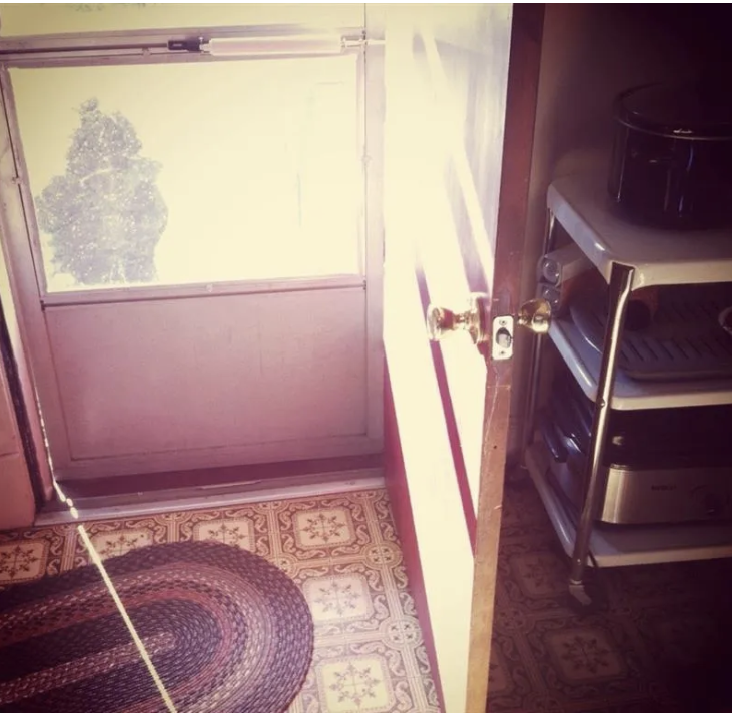
Not being on social media I know I am missing out. When I wrote about my last detox, I mentioned that it’s surprisingly lonely without the constant sense of everyone's presence through the screen. I feel a lot of pressure to use AI in my life, and worry people think I am just trying to be contrary if I don’t. But truly, stitching at night has very little to do with an alternative to technology. I am just following my longing to be back in Gram’s kitchen, drinking a cup of coffee while leaning against a big porcelain sink, flipping through a Reader’s Digest and listening to Gram talk about the meal plan for the day. It was just another way of being.


Comments